AI news 2025: What Does the Future Hold?
Updated: Dec 19, 2025
Table of Contents
1. Introduction: Artificial Intelligence – Friend or Foe?
Artificial Intelligence (AI) has seamlessly integrated into our lives, whether we like it or not. From “Hey Siri” and “OK Google” to autonomous drones, AI enhances every moment of our day. Spotify recommendations at breakfast, robotic chefs at dinner, and support for personal projects in between, AI is everywhere.

What is AI?
Artificial intelligence refers to machines' ability to mimic human intelligence.
Through machine learning, AI can analyse data, understand natural language, and provide personalised solutions.
For instance, OpenAI develops models that bridge the gap between humans and technology, bringing machine learning algorithms into every corner of our digital lives.
Impact on Daily Life
From using an app to translate phrases into different languages to creating visual content with a single click, AI has become an essential helper. Companies like Microsoft integrate AI into Office applications, while OpenAI advances creative processes like image generation and task automation. AI empowers users to develop efficient solutions and overcome human limitations.
A Look Ahead to 2025
The year 2025 marks a turning point in AI usage.
From practical applications in everyday life to groundbreaking innovations, AI continues to reshape the future. Will this technology become a loyal friend or a hidden foe?
Only time will tell, but with natural language processing, machine learning, and complex applications evolving, AI is set to profoundly shape our world.
2. The New Algorithms: Faster, Smarter, and More Bored of Us
The year 2025 marks a pivotal evolution in AI algorithms, which not only process data faster but also adapt autonomously. These advancements promise to revolutionise applications across fields ranging from medicine to education.
Advanced Generative Algorithms
AI models can now generate not just text but also images, code, and solutions for complex problems. These systems boast increased autonomy, offering tailored solutions based on context.
For example, the AI systems of 2025 can develop intricate software programs or design prototypes for cutting-edge technologies. They are capable of interpreting vague requirements and delivering solutions that meet specific user needs.
Energy Efficiency
In a world increasingly focused on ecological impact, modern AI models leverage energy-efficient architectures. This means lower energy consumption during training, coupled with faster and more precise results.
By optimising resources, AI becomes more sustainable, making it appealing to both large organisations and individual users.
Universal Applications
AI's expansion knows no boundaries. In agriculture, algorithms optimise irrigation and detect pests. In robotics, autonomous systems grow smarter, collaborating with humans on diverse projects.
In space exploration, AI enables complex missions by analysing data in real-time and proposing solutions for unforeseen challenges.
3. The Impact of ChatGPT and Other Text Generators
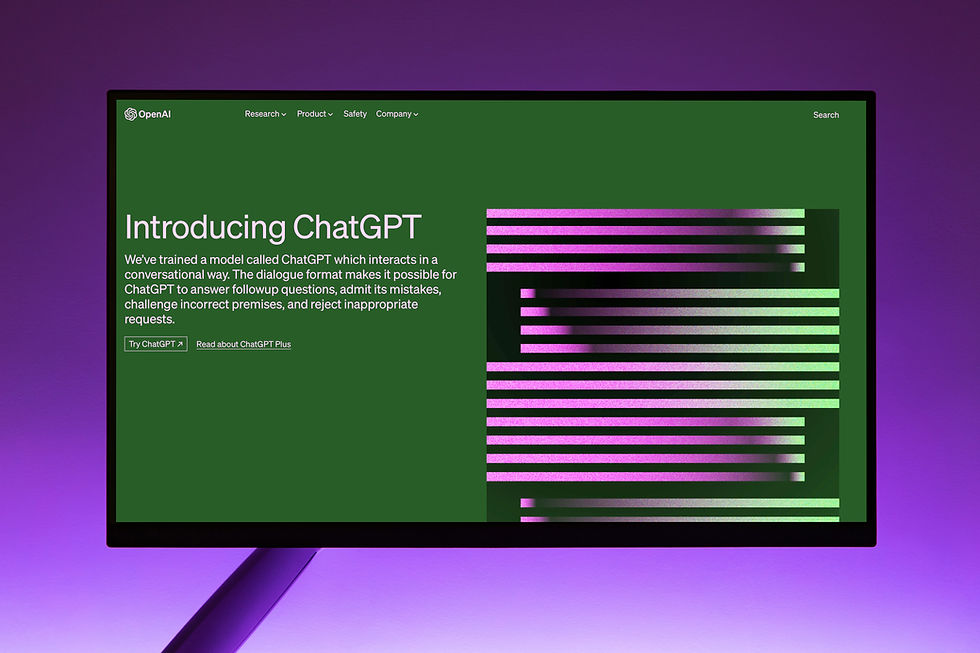
If AI has amazed you so far, ChatGPT and similar platforms continue to push the boundaries of human-machine interaction.
Education Reimagined
Text generators like ChatGPT are increasingly used in schools and universities.
Students benefit from clear and detailed explanations in real time, making learning more engaging and interactive.
These tools also enable the rapid creation of educational materials tailored to different learning styles, making education more accessible to people regardless of location or resources.
Creative Marketing
The marketing industry has been transformed by these tools.
Companies use text generators to craft personalised, captivating, and effective campaigns in a fraction of the time.
From creating advertising slogans to generating content for social media, AI has become an indispensable partner. These applications not only save time but also introduce a level of creativity that rivals the human mind.
Technological Limitations
Despite their impressive capabilities, ChatGPT and other text generators still face limitations.
At times, they fabricate information or fail to correctly interpret the emotional context of a conversation.
These imperfections raise concerns about their use in critical fields such as medicine or law, where accuracy is paramount. However, with each new version, these challenges are increasingly addressed, and the potential continues to grow.
4. Widespread Automation and the Future of Work
As AI advances, automation is becoming the norm across industries, from manufacturing to services. But what does this mean for us, humans, and our daily work? Let’s dive in.

Industrial Transformations
The manufacturing industry is already a playground for artificial intelligence.
Autonomous factories, equipped with robots that communicate with one another, are becoming increasingly common.
This not only optimises processes but also significantly reduces production costs. It’s not just about machines doing things faster; AI can predict issues in the production line and resolve them before they escalate. In other words, factories no longer need coffee breaks (a shame, though, for the sake of socialising).
A New Era of Jobs
Far from the apocalyptic scenarios where robots "take our jobs," automation is creating new opportunities. Fields like IT, data analysis, and software engineering are booming. Sure, repetitive jobs are being automated, but this allows people to focus on tasks requiring creativity and strategic thinking. In short, less "copy-paste," more brainstorming.
Human-AI Collaboration
Imagine AI as your new teammate: it doesn’t get tired, doesn’t complain about cold coffee, and always aims to make your life easier. That said, it can’t make all the decisions on its own.
This is why human-AI collaboration is emerging as the ideal model in many industries. We bring creativity and emotional intelligence, while AI delivers data analysis and efficiency. It’s a combination designed to revolutionise the world of work, with less stress for us.
5. AI in Medicine: From Diagnoses to Assisted Surgeries
Artificial intelligence continues to push the boundaries of medicine.
With a mix of advanced algorithms and cutting-edge technology, AI is becoming an indispensable partner for healthcare professionals, revolutionising diagnostics, treatments, and even mental health support.

Precision Diagnostics
Imagine a doctor who can scan and analyse hundreds of medical images in a second, delivering an incredibly accurate diagnosis. AI can detect diseases like cancer or heart conditions in their earliest stages, where the human eye might miss subtle signs.
Advanced image recognition systems identify nuanced patterns, significantly speeding up the diagnostic process. The result? Less waiting time and better chances for effective treatment.
Robot-Assisted Surgeries
Surgical robots are no longer a sci-fi dream but a growing reality in hospitals worldwide.
Powered by AI, they assist doctors in complex operations with a level of precision even the steadiest human hand can’t match.
For instance, systems like the Da Vinci Surgical System enable minimally invasive procedures, reducing post-operative pain and recovery time. However, while AI can perform unimaginable surgeries, it still can’t deliver bad news to a patient with the same tact as a human doctor.
Mental Health Support
AI is emerging as an unexpected ally in addressing mental health issues.
Advanced chatbots like Woebot or Wysa provide emotional support, helping users manage stress, anxiety, or depression. While no robot can truly ask, “How are you feeling?” and listen like a friend, these tools are valuable as complementary support in therapy and counselling.
6. Top AI Tools Revolutionising Industries
Artificial intelligence in 2025 is defined by innovative tools that are reshaping the way we work, create, and live. Each tool is unique in its capabilities, yet all contribute to the overall advancement of technology.

Revolutionising Visual Arts
Tools like DALL-E and MidJourney are taking generative art to new heights.
They allow users to create stunning images from simple textual descriptions.
These generated visuals aren’t just combinations of pre-existing fragments but entirely new creations inspired by the user’s ideas. In this way, the artist becomes a creative director, with AI as an unbeatable collaborator.
Automating Code
Platforms like AlphaCode are transforming how programmers work.
There’s no longer a need to master the syntax of every programming language; AI can efficiently generate code based on clearly explained requirements. These tools also reduce human errors, speeding up the development of complex software projects.
Autonomous Mobility
AI in autonomous vehicles, like Tesla’s systems, exemplifies a revolution in mobility.
These systems not only help prevent accidents but also optimise routes and reduce energy consumption.
While it may sound like a sci-fi dream, the entire automotive industry is heading toward a driverless future, where AI takes over the wheel, leaving us free to browse Spotify playlists instead of fuming at red lights.
7. AI in Education: Virtual Teachers and Total Personalisation
Artificial intelligence is reshaping how we learn, providing innovative solutions for accessible, personalised, and interactive education. From tireless virtual teachers to platforms that make homework fun, AI is the new star of the classroom.

Virtual Tutors
Imagine a teacher who adapts to your pace and preferences without judging you for not remembering all the capitals from Year 5.
AI-powered systems do exactly that, tailoring study materials with clear explanations, practical examples, and tests suited to your knowledge level. Essentially, it’s like having a teacher who never calls on you when you’re unprepared.
Gamified Platforms
If learning through games sounds like a dream, it’s already a reality.
AI-driven educational platforms turn tough subjects into exciting missions and virtual rewards.
History can transform into an adventure game exploring past eras, while maths becomes a complex puzzle. Instead of closing your textbook out of boredom, you’ll want to “level up” just one more time.
Global Accessibility
With AI, quality education is no longer a privilege for those in big cities or with significant financial resources. It enables students in the most remote corners of the world to access the same high-standard lessons. Distance or the lack of a teacher is no longer an excuse. AI is always there, ready to explain even the trickiest concepts for the tenth time if needed.
8. Ethical Challenges and AI Regulations
As artificial intelligence expands, ethical dilemmas are becoming increasingly urgent.
While we enjoy AI's benefits, every step forward brings a new set of questions.
How do we ensure these technologies evolve in ways that benefit everyone, not just a select few?

Decision Transparency
A major issue with AI systems is their opaque decision-making processes.
For instance, if AI denies a loan application or selects a job candidate, how can we understand the reasoning behind the decision? To address this, developers are working on algorithms that explain their decision-making in accessible terms.
Until then, AI remains like a magician performing impressive tricks but keeping the secrets behind the curtain. Establishing a clear structure for how we use AI in everyday life will be crucial for the future.
Preventing Bias
Although AI seems impartial, it is built on data provided by humans.
This means our biases can be amplified and perpetuated by algorithms.
For example, an AI recruitment system might favour a certain gender or ethnicity if the historical data it was trained on is unbalanced.
The solution? Constant monitoring and ethical approaches to development.
Let’s not allow our digital assistant to become a friend who mirrors our worst jokes.
Global Regulations
Without clear legal frameworks, AI usage can spiral out of control.
From safeguarding personal data privacy to accountability for incorrect decisions, regulations are essential.
The European Union has already proposed strict laws for AI usage, but the challenge lies in achieving global coordination. No one wants a "Wild West" of AI where anything goes and responsibility only surfaces when someone gets caught.
9. Conclusion: Preparing for the Future of AI
Artificial intelligence, driven by advancements in large language models, is more than just a technological concept, it’s an opportunity to rethink how we shape the future.
From transforming daily tasks to addressing humanity’s greatest challenges, AI is unlocking doors that once seemed impossible to open. However, like any groundbreaking tool, it demands thoughtful and ethical use.

The journey toward responsible AI isn’t just for researchers, developers, or major investors; it’s a shared responsibility. Entrepreneurs and everyday users alike must engage with this technology to understand its potential and risks, ensuring it’s used to benefit all.
From creating video content to optimising chips for AI efficiency, the scope of possibilities is vast. Whether you’re preparing for a pitch to investors, conducting research, or considering how AI might support a startup, understanding its nuances is essential. History reminds us that technological revolutions can bring progress, but they also pose risks, when misused, they can lead to setbacks or even contribute to "the death of innovation" through unchecked exploitation.
At this pivotal moment, as December 2024 approaches with reflections on the year and plans for 2025, we encourage everyone to take proactive steps. Whether you want to learn how to buy into AI-driven ventures or explore its creative applications, the first step is education.
We offer courses and mentorship sessions tailored to empower investors, entrepreneurs, students, and visionaries. Let’s embrace AI not as a challenge but as an opportunity to co-create a more innovative, equitable future. The future always starts with you.


Comments