Artificial Intelligence, The Truth About Everything
Updated: Dec 19, 2025
Table of Contents
1. Introduction: What is Artificial Intelligence (AI) and Why Does It Fascinate Us?
Artificial Intelligence (AI) is that branch of technology that teaches robots to think, or at least appear smarter than us, which they sometimes manage to do.
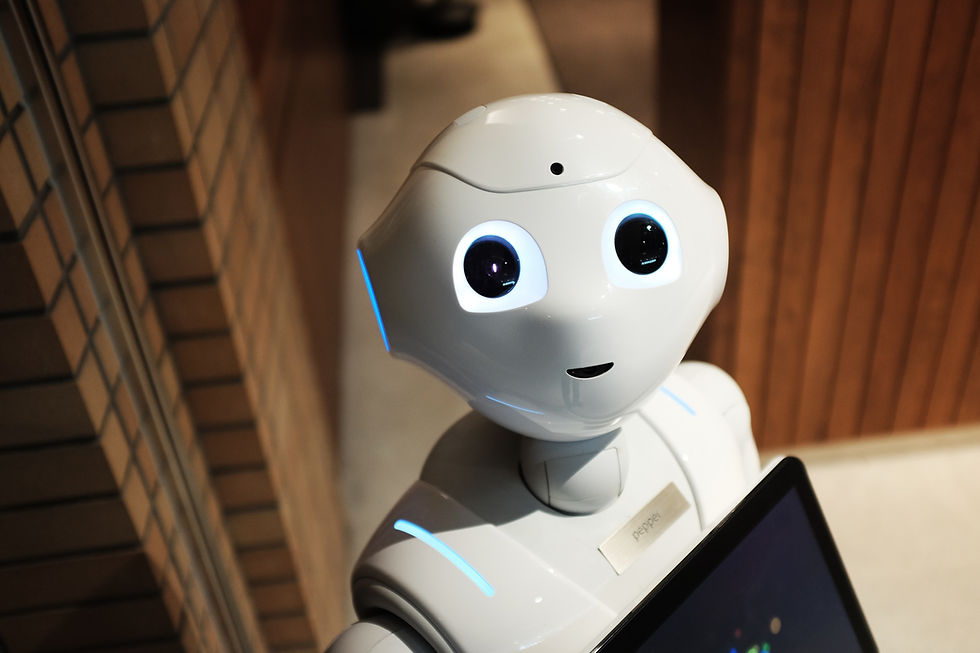
From virtual friends like Siri and Alexa, who seem to have an answer for everything, to self-driving cars and programs that organize our lives better than we can, AI is everywhere. But why does this concept fascinate us so much? Simple: it promises to make our lives easier, more efficient, and, with some luck, more interesting.
Narrow AI and Artificial General Intelligence (AGI)
Narrow AI represents systems designed to perform specialized tasks, like facial recognition or automated translation. These systems are extremely efficient but limited to their specific domain.
On the other hand, AGI (Artificial General Intelligence) represents the much-anticipated future of AI. Unlike Narrow AI, AGI would have the ability to learn and solve diverse problems, just like humans.
Narrow AI: Used for tasks such as image classification, virtual assistance, or data analysis, but lacks a general understanding of context.
AGI: The grand promise of AI, a digital mind capable of solving problems across multiple domains without needing coffee breaks or vacations. Sounds like a dream that AI systems learn? Perhaps, but one pursued with both enthusiasm and a hint of fear, who knows how "versatile" it will eventually become?
Imagine teaching a computer to see and think like a human brain – pretty cool, right?
That’s exactly what happens with artificial neural networks, which are inspired by the way our brains process information. These networks, especially deep neural networks, are the backbone of AI systems that can learn to do tasks we’d normally think typically require human intelligence.
Take computer vision, for example: it’s how AI recognizes objects in images or videos, using techniques like deep learning and working through multiple layers of connected nodes to process and analyze data. But how does it actually learn? It all starts with training data – loads of images, videos, or other info that teach the system what’s what.
In the world of computer science, this tech powers everything from image recognition (like tagging your friends in photos) to self-driving cars. So next time your favorite app knows exactly what’s in your pic, thank those hardworking neural networks!
Human Curiosity About Technologies That Replace Us
Every technological leap sparks a mix of excitement and concern.
We’re fascinated by the possibility that machines could surpass us, but this fascination comes with questions about our future.
Fear of Replacement: Since the Industrial Revolution, people have wondered whether new technologies would eliminate jobs. AI continues this debate.
Fascination with Automation: Machines that learn and adapt demonstrate human progress but also raise existential questions.
Psychological Impact: The idea that machines can outperform humans in many tasks can be a source of stress but also an opportunity for personal growth.
Why Human Thinking Remains a Model for AI
Although AI is advancing rapidly, human thinking remains the gold standard.
The reasons are simple: our complexity, adaptability, and empathy are difficult to replicate.
Empathy and Emotions: Algorithms cannot simulate feelings or understand emotional nuances within a context.
Lateral Thinking: Humans can find unexpected solutions through creativity, while AI operates based on existing data.
Social Interactions: AI can recognize patterns but still struggles to respond to cultural or situational subtleties.
Why Human Thinking Remains a Model for Artificial Intelligence
Despite the lightning speed of AI advancements, human thinking remains the ultimate benchmark. Algorithms are impressively efficient, calculating, analyzing, sorting, but they lack the secret ingredients that make us truly intelligent: empathy, creativity, and the knack for navigating social complexities. Simply put, machines can do a lot, but they still don’t know how to be… human.
Empathy and Emotions: AI algorithms can analyze data with incredible precision but cannot simulate human empathy or interpret emotional nuances in a conversation. This is why professions like psychologists or counselors remain far from being completely replaced by AI.
Lateral Thinking and Creativity: Unlike AI, humans can generate unexpected solutions or make connections between seemingly unrelated fields. For instance, an artist can create a masterpiece driven by pure emotion, while AI creates based only on existing data.
Social Interactions: While AI can recognize patterns and execute repetitive tasks, human interactions are far more complex. For example, a virtual assistant cannot detect cultural subtleties or nuances in body language, limiting its relevance in diverse social contexts.
While AI is a powerful tool, human thinking remains irreplaceable when it comes to understanding broader contexts and making complex decisions.
2. How Artificial Intelligence is Changing the World We Live In
Artificial Intelligence (AI) is rewriting the rules in almost every industry, transforming how we interact with technology.

From self-driving cars (making us dream of traffic without honking) to smart farms revolutionizing sustainable agriculture, AI leaves its mark everywhere. It's like a guest who shows up at every party and quickly becomes the center of attention.
Autonomous Transportation and Road Safety
Autonomous transportation promises a revolution in road safety and mobility efficiency. Companies like Tesla and Waymo are developing technologies that reduce accidents caused by human error, but this field faces significant challenges.
Efficiency and Safety: Autonomous vehicles use advanced sensors and algorithms to make split-second decisions. For instance, a system can detect a pedestrian in a poorly lit area faster than a human driver.
Legal and Ethical Challenges: Who is responsible in case of an accident, the manufacturer, the software, or the vehicle user? These dilemmas slow down widespread adoption.
Impact on Traffic: Autonomous cars could reduce congestion and pollution, but infrastructure must adapt to enable efficient integration.
Healthcare – From Diagnostics to Personalized Treatments
Artificial Intelligence is transforming healthcare, providing tools for quick diagnoses and personalized treatment solutions.
Early Diagnosis: Algorithms, like those developed by DeepMind, analyze medical images to identify diseases like cancer in early stages, saving lives through timely interventions.
Personalized Treatments: IBM Watson collaborates with hospitals to recommend tailored treatment plans based on medical and genetic histories.
Accelerated Research: AI platforms help discover new medications by simulating complex scenarios in virtual laboratories.
AI’s Impact on Agriculture and Sustainability
Agriculture is becoming more efficient and sustainable through AI applications that optimize resource use.
Smart Monitoring: AI-equipped drones can quickly detect signs of plant diseases or nutrient deficiencies, allowing farmers to take immediate action.
Water Management: Algorithms predict irrigation needs based on weather conditions and soil characteristics, reducing waste.
Increased Yields: AI analyzes historical and current data to suggest the best times for planting and harvesting, maximizing production.
3. Practical Applications of AI – From IT to Medicine
Artificial Intelligence has made its way into nearly every field, proving to be incredibly versatile and useful.

From algorithms that turn industrial processes into a symphony of efficiency to medical solutions that save lives, AI has firmly established itself as a cornerstone of progress. It’s like a digital multitool you didn’t know you needed but now can’t live without.
The Role of Companies Like Google and OpenAI
Leading companies like Google and OpenAI are at the forefront of the AI revolution, developing technologies that transform how we interact with information and automate processes.
Google: Search algorithms have become smarter, anticipating user needs with personalized suggestions. Google Translate uses AI to offer increasingly accurate translations, breaking language barriers.
OpenAI: Language models like ChatGPT have made AI more accessible, whether for content creation or daily task assistance.
Global Collaborations: These companies work with academic and industrial organizations to expand AI’s applicability.
How AI is Changing the Entertainment Industry
The entertainment industry is one of the areas where AI has brought remarkable changes, shaping how we consume content.
Personalized Recommendations: Platforms like Netflix and Spotify use AI to suggest movies, shows, or music based on user preferences, creating more engaging experiences.
Content Creation: AI algorithms can generate movie scripts, compose music, or even create animated characters. Example: AI was used in productions like The Mandalorian for visual effects.
Immersive Interaction: Video games utilize AI to create dynamic virtual worlds and smarter non-player characters (NPCs).
Medical Applications – Early Detection of Diseases
Healthcare is a field where AI has a direct impact on people’s lives, providing fast and accurate solutions for diagnosis and treatment.
AlphaFold by DeepMind: This technology predicts protein structures with impressive accuracy, accelerating medical research.
Rapid Diagnosis: Algorithms analyze MRI scans or X-rays to detect diseases like cancer or cardiac conditions.
Monitoring and Prevention: AI-based health apps, such as those developed by Fitbit or Apple, help users monitor vital signs and prevent health issues.
4. The Advantages of AI – What Good Does It Bring?
Artificial Intelligence offers solutions to the most complex problems, saving time, resources, and sometimes, nerves.

From transforming industrial processes into something elegant and efficient to turbo-boosting innovation, AI radically changes how we perceive the modern world. It’s like a digital magician solving problems while we wonder, “Why didn’t we have this earlier?”
Increased Efficiency in Industrial Processes
AI is used to automate complex processes and improve efficiency, especially in fields like manufacturing and logistics.
Advanced Automation: Companies like Siemens and General Electric use AI to optimize production lines, reducing waste and increasing productivity.
Smart Logistics: Amazon leverages AI to manage warehouses and deliveries, ensuring faster shipping times.
Resource Economy: AI minimizes material usage by optimizing processes, lowering costs, and reducing environmental impact.
Error Reduction and Productivity Growth
AI is renowned for its incredible accuracy, reducing errors that can occur due to human factors.
Rapid Data Analysis: Algorithms process millions of data points in seconds, eliminating manual mistakes.
Consistent Production: AI-controlled machines operate 24/7 without exhaustion, ensuring steady productivity.
Better Decision-Making: AI helps managers make data-driven decisions instead of relying on assumptions.
Support for Research and Innovation
Artificial Intelligence drives progress in many research fields, from space exploration to medicine.
Space Exploration: NASA uses AI to analyze data from space telescopes and discover new exoplanets.
Drug Development: AI algorithms accelerate the discovery of new drugs by simulating chemical reactions virtually.
Innovative Technologies: Companies like IBM and Microsoft create AI solutions to tackle global challenges, such as climate change.
Using AI strategically, we can turn challenges into opportunities, providing efficient solutions for an ever-changing world. Artificial Intelligence offers practical answers to complex problems, saving time and resources while driving innovation.
5. Challenges and Limitations of AI
Although it promises the moon and the stars (and sometimes delivers), AI is not without flaws, it has weaknesses that cannot be overlooked. Essentially, it’s like a tech superstar that occasionally forgets the lyrics. And, like any technology, it comes with challenges that must be faced thoughtfully and responsibly.

Dependence on Data and Its Quality
Without accurate data, AI can produce incorrect results, potentially leading to serious consequences.
Data Quality Matters: Algorithms are only as good as the datasets they are trained on. Incomplete or inaccurate data lead to flawed conclusions.
Embedded Biases: If the training data contains biases, AI can amplify them, perpetuating inequities.
Quantity Issues: AI systems require vast amounts of data to function optimally, raising concerns about data privacy and collection practices.
Difficulties in Understanding Human Context
AI cannot embody empathy or grasp the complexity of social situations as humans can.
Lack of Emotions: While algorithms can analyze facial expressions, they cannot deeply interpret emotions.
Rigidity: AI operates based on predefined rules, limiting its ability to react spontaneously in unpredictable situations.
Artificial Interactions: AI systems, such as chatbots, can handle simple questions but often fail in complex or sensitive conversations.
High Costs of Implementation
Developing and implementing AI technologies requires significant investment, limiting their accessibility.
Expensive Infrastructure: High-powered servers needed for AI training and data storage come with substantial costs.
Limited Access for Small Businesses: Only large organizations can afford these expenses, creating inequality in technological access.
Maintenance Costs: Frequent updates and ongoing technical support add to the financial burden.
AI, while powerful, faces critical challenges in data dependency, understanding human nuance, and affordability, which highlight its limitations in certain applications.
6. Ethics and Controversy Surrounding AI
Ethical issues are the centerpiece of any debate about AI because this technology raises profound questions that make us think hard:
What happens to privacy?
Where do we draw the moral line?
How do we ensure a level playing field for everyone?
AI doesn’t just amaze us, it also challenges us to be wiser than the algorithms we create.
Privacy of Personal Data
In a world where data is the new “digital gold,” managing it responsibly is crucial. Companies like Facebook and Amazon have often been criticized for using personal user data without transparency.
Massive Data Collection: AI requires vast amounts of data to function effectively, but this raises concerns about consent and ethical use.
Lack of Transparency: Many users are unaware of how their data is used, creating a trust deficit.
Insufficient Data Protection: Security breaches are common, endangering sensitive personal information.
Automated Decisions and Moral Responsibility
AI makes decisions in many areas, from hiring candidates to approving loans, but who is accountable when these decisions are wrong?
Absence of Human Factors: Algorithms make choices based on data, ignoring human context or emotions.
Legal Responsibility: In the case of an accident caused by an autonomous vehicle, who is at fault, the manufacturer, the algorithm, or the user?
Decisions with Major Impacts: AI systems can deny credit or influence careers without immediate opportunities for appeal.
Risks of Discrimination and Algorithmic Bias
AI algorithms learn from the data they receive, and if this data is biased, the outcomes will reflect and amplify these inequities.
Bias in Training Data: If a dataset is biased (e.g., underrepresents a demographic group), AI will perpetuate those biases.
Negative Social Impact: Biased algorithmic decisions can limit access to jobs, services, or educational opportunities.
Difficulty in Correction: Once an algorithm is implemented, removing bias is complex and costly.
AI not only opens doors to progress but also requires careful consideration of its ethical implications, ensuring fairness, accountability, and respect for privacy in its application.
7. The Impact on Jobs – Is the Robot Taking Your Job or Just Upgrading It?
Artificial Intelligence is transforming the job market at a pace that makes you wonder if you can still keep up.

Some jobs quietly disappear backstage, while others take center stage, making adaptability the new superpower for any professional. It’s like a game of technological musical chairs, where those who adapt quickly always find a seat.
Automation of Repetitive Tasks
AI excels at taking over repetitive and tedious tasks, allowing employees to focus on more creative and strategic activities.
Increased Efficiency: In factories, AI-controlled robots reduce production time and minimize errors. Examples include automated assembly lines in the automotive industry.
Relief from Menial Tasks: Accountants, for instance, use AI to automate data entry, freeing up valuable time for more complex financial analysis.
Risk Reduction: AI is employed in hazardous environments like mining or handling chemical materials, protecting human workers.
Emergence of New Roles in Technology
The rise of AI has created demand for professions that didn’t exist a decade ago. Engineers and technology specialists are increasingly sought after.
Data Engineer: This role involves managing and analyzing large datasets to fuel AI algorithms.
Machine Learning Specialist: These experts develop and optimize AI models for applications ranging from facial recognition to autonomous vehicles.
AI Ethics Managers: A growing profession dedicated to ensuring algorithms meet moral and legal standards.
The Need for Professional Reskilling
To stay relevant in the job market, employees must acquire new skills and adopt a flexible mindset.
Reskilling Programs: Many companies offer training programs to help employees learn to work with AI, such as using advanced software tools.
Human-Machine Collaboration: Instead of being replaced, workers collaborate with AI to enhance productivity and innovation.
Continuous Education: Academic programs are evolving to include courses on AI and its societal impact.
AI doesn’t just eliminate jobs, it reshapes the workforce, creating opportunities for those willing to adapt while enhancing roles through automation and innovation.
8. The Future of AI – Dystopia or Utopia?
Where are we headed?
Well, that depends on how well we manage the development of AI.
Artificial General Intelligence (AGI) represents the next step in AI evolution, promising human-like intelligence but with significant risks. From the dream of a general AI capable of doing everything to the dangers of over-reliance on technology, the future of AI promises to be as thrilling as it is precarious. We’re essentially playing with fire, hoping for light to guide us rather than burn us.

What is Artificial General Intelligence (AGI)?
AGI is the next step in AI’s evolution, promising human-like intelligence but carrying major risks. Unlike Narrow AI, AGI would be capable of solving complex problems across multiple domains, mimicking human adaptability.
Generalized Learning: AGI not only learns from data but also thinks autonomously, making decisions based on varied experiences.
Potential Benefits: It could revolutionize medicine, education, and space exploration, offering solutions to global challenges.
Major Risks: An uncontrolled AGI could have unpredictable consequences, including decisions that go against human interests.
Optimistic Perspectives for a Better World
AI could be the key to solving some of humanity’s biggest challenges. From climate change to food crises, responsible use of AI could create a brighter future.
Climate Change: AI algorithms can optimize resource consumption and renewable energy, reducing the carbon footprint.
Global Health: AI can help efficiently distribute medical resources in underserved areas, providing better access to treatments.
Personalized Education: AI-based systems could create tailored educational plans for each student, reducing inequalities in education.
Risks of Excessive Control and Loss of Human Autonomy
As AI becomes increasingly integrated into our lives, there’s a risk of technology taking control of important decisions, reducing human autonomy.
Over-Dependence: Without AI, many daily activities could become impossible, creating a cycle of technological dependence.
Manipulation Through Technology: Algorithms that control information flows could influence political or economic decisions, limiting freedom of choice.
Loss of Human Oversight: Rapidly evolving AI could surpass our ability to monitor it, potentially leading to existential risks.
The future of AI lies at a crossroads.
While it holds immense potential to transform the world for the better, it also comes with challenges that demand careful management. Whether AI leads us to a dystopia or a utopia depends on how responsibly we navigate this technological frontier.
9. Conclusion: Balancing Enthusiasm and Caution
Artificial Intelligence is like a double-edged sword: it can be the reliable friend that makes your life easier or the noisy neighbor that causes more headaches than solutions. It all depends on how we use it, with responsibility, curiosity, and a vigilant eye.
AI has become an integral part of our daily lives.

If this topic intrigues you, we invite you to explore more through our courses and mentoring sessions. We’ll show you how to make AI a trusted ally, both for yourself and for the good of society.
From machine learning that analyzes data and improves processes to natural language processing for more efficient communication with clients and colleagues, AI is now part of our everyday experience.
Generative or not, this technology simplifies workplace tasks and makes life more interesting. Automation, personalization, and innovation are often closer than you think, and through our AI courses and mentorship sessions, we help you stay informed, up to date, and ready to apply the latest advancements with confidence.


Comments