Cluj-Napoca: The Smart City of Transylvania
Updated: Dec 28, 2025
1. Introduction: Municipality and Cluj County
Cluj-Napoca is the kind of city that, once you visit, it captivates you permanently. It’s like going on a short vacation and realizing you want to move there forever. It has everything: from breathtaking architecture and landscapes to a cultural vibe that makes your soul resonate. It’s a city where life pulses, fueled by over 100,000 students from all corners of the world.

Whether it’s about hip pubs, energetic nightclubs, restaurants with an international cuisine, or peaceful moments of strolling, Cluj invites you to discover something new at every step, including local traditions and local people. Last year it started running events with local chef Horia Simion hosting slow food lunches using local ingredients and showcasing Transylvanian gastronomy.
And yes, it’s perfectly fine to call it "Koloshvar" or "Klausenburg" if you want to impress with your Hungarian or German language skills. But no matter how you call it, one thing is certain: it’s the second-largest city in Romania, and its tech-savvy, cosmopolitan rhythm makes it feel even bigger.
Cluj County is located in the northwestern part of Romania, in the historical region of Transylvania. It is one of the most economically and culturally significant counties in the country.
If Cluj were a person, it would be that cool friend who can code perfectly but would never miss a local jazz festival. The Transylvanian tradition and modern innovative spirit blend perfectly here, offering you everything you need, from top-notch education to a sensational coffee at every street corner.
2. European Cultural Capital in Waiting: Cluj’s Bright Future
Although it hasn’t officially worn the crown of European Cultural Capital, Cluj has been and remains a serious contender for this title. In fact, if there were a competition for the biggest urban party, Cluj would be there on the podium, with plenty of confetti and a DJ set ready.
Cluj is like that friend who, even if they haven’t won the official trophy, knows how to be the center of attention, and they do it spectacularly.

The city is already famous for its renowned festivals that turn Cluj summers into a marathon of fun. We’re talking about TIFF (Transilvania International Film Festival), which brings cinephiles from all over the world together and gives you the chance to see movies that never make it to Netflix, and Untold, where you can practice your dance moves in a mix of electronic music and an almost magical atmosphere.
In fact, every June, July, or August, in Cluj, it feels like an endless festival vacation, only, instead of sand and water, you have Central Park, Bánffy Castle, and lots of good vibes in the air.
But Cluj doesn’t stop at parties. Besides TIFF and Untold, the city surprises with a rich cultural scene full of creative info that uniquely combines contemporary art with Transylvanian traditions. You’ll find modern art exhibitions that make you rethink what “creativity” means, experimental theater performances that push you out of your comfort zone, and street events where you meet local artists that amaze you with their talent.
If Timișoara has already been crowned European Cultural Capital, Cluj stands at the door, ready to take the throne. Whether it’s jazz on the narrow streets of the old center, open-air film screenings, or interactive exhibitions, Cluj shows that it’s ready to be a top-tier Cultural Capital.
3. Population: The Exponential Growth of the Tech City
Cluj-Napoca is the city where, if you haven’t been yet, you’ve probably heard of “the best IT specialists in the country” or the crazy festivals that make the city vibrate every summer. But let’s also talk about the “serious” side of the city, meaning the population, salaries, and purchasing power – the details that make life in Cluj so attractive.

Population of the Municipality: Where the Youth Reigns
Cluj-Napoca is home to around 330,000 inhabitants, but the real charm comes from the over 100,000 students who keep the city constantly in motion.
It’s like taking a medieval town, filling it with people who can fix bugs and still dance until 4 a.m. at Untold. This mix of youth and energy makes Cluj compared to other romanian cities a vibrant place where it’s almost impossible to get bored.
Whether you’re in a café with super-fast Wi-Fi or at an indie concert in an underground club, the youthful atmosphere gives you the feeling that the city is constantly reinventing itself.
Prices: High Enough to Make You Reconsider Your Moving Plans
Rents and real estate are at an almost shocking level compared to other cities in the country. If you’re thinking of renting an apartment in downtown Cluj, be prepared for prices that can go over 600-700 euros a month. And if you want to buy something, prices for a decent apartment start at 2,000 euros per square meter and can rise steeply.
However, the high prices haven’t stopped the continuous development of the city. Real estate investments are booming, and the demand for modern homes remains extremely high, supported by the wave of IT specialists and expats coming to live and work in the city.
Cluj-Napoca is essentially a city enjoying its economic and social golden age. It attracts its residents through a combination of professional opportunities, excellent academic environments, and a quality of life that, although it comes with high costs, offers unforgettable experiences. So, if you’re young, have enviable skills, and dream of being part of Romania’s “big world,” Cluj is the perfect place for you – but be prepared to dig into your wallet!
4. Economic Indicators: Cluj-Napoca, Romania’s Silicon Valley
Purchasing Power: Beware of Real Estate Prices
Cluj is far from being cheap, especially when it comes to real estate. However, purchasing power has increased substantially in recent years, being among the highest in the country. Competitive salaries, especially in the IT and financial sectors, have turned the city into a magnet for young professionals seeking quality urban living.

It’s clear, it’s not Bucharest, but housing prices have skyrocketed – almost at the level of some European capitals. If you want to buy an apartment, you’d better be prepared for a serious investment. Still, it’s not surprising, given that Cluj has become something like Romania’s “Silicon Valley.”
Salaries: Where IT Specialists Get Rich
When it comes to salaries, Cluj Napoca and the IT sector excel. The average salary is far above the national average, and in the IT field, a specialist can easily earn over 2,000-3,000 euros monthly. And no, not only IT specialists are doing well – the local economy is also supported by the financial, pharmaceutical, and outsourcing sectors, offering well-paid jobs.
Unemployment Rate
With such a dynamic economy, unemployment in Cluj is at a historic low, below 2%. Job opportunities are everywhere, especially in innovative fields like software development, biotechnology, and research. Foreign investments are constantly flowing in, with large international companies opening offices and research centers here.
5. International Connections: Between the West and the East
Cluj-Napoca is the kind of city that, without being a national capital, manages to have a notable international presence. If it were a person, Cluj would be that traveler friend who always finds good flight deals and knows exactly the shortest routes to reach anywhere in Europe.

Cluj-Napoca International Airport
It is the key that makes this city feel like a global hub. With direct connections to major European cities like London, Paris, Vienna, Frankfurt, and many more, Cluj offers a quick and efficient gateway to the rest of the continent.
No wonder so many expats and international entrepreneurs choose to establish their base here, you board a flight in the morning, and by evening, you’re already at a business meeting in London, after which you return for a peaceful stroll through Central Park.
Proximity to Hungary and Austria
Also plays an essential role in Cluj’s strategic position. Just a few hours from the Hungarian border, Cluj has transformed into a vital hub for trade and cultural exchanges between Romania and the rest of Central Europe.
Cultural and Economic Links
Many investors from the West have set their sights on Cluj, not only because it’s a booming IT hub, but also due to its accessibility to the European market. Large companies from Austria and Germany have opened offices and branches here, taking advantage of the skilled workforce and well-developed infrastructure.
6. Investments and Expansion: From Start-ups to Global Giants
If you visit Cluj Napoca, you will see the kind of city that without being a national capital, manages to have a notable international presence. Basically, if it were a person, Cluj would be that traveler friend who always finds good flight deals and knows exactly the shortest routes to get anywhere in Europe.

Cluj-Napoca International Airport
It is the key that makes this city feel like a global hub. With direct connections to major European cities such as London, Paris, Vienna, Frankfurt, and many others, Cluj offers a quick and efficient gateway to the rest of the continent.
It’s no wonder that so many expats and international entrepreneurs choose to base themselves here – you board a flight in the morning and by evening you’re already at a business meeting in London, after which you can leisurely return for a walk in Central Park.
Proximity to Hungary and Austria
Also plays a crucial role in Cluj’s strategic position. Just a few hours away from the Hungarian border, Cluj has transformed into a vital hub for trade and cultural exchanges between Romania and the rest of Central Europe.
The fact that you can hop in a car and, within a day, be in Budapest or Vienna adds a huge advantage, both for businesses and for those who want to explore the region.
Cultural and economic connections
Are also extremely strong. Many investors from the West have set their sights on Cluj, not only because it is a booming IT hub, but also due to its accessibility to the European market.
Large companies from Austria and Germany have opened offices and branches here, taking advantage of the skilled workforce and well-developed infrastructure. Essentially, Cluj is like a “gateway” connecting Western European businesses with the East, making the city fertile ground for international collaborations.
Cultural and educational exchanges
From international conferences organized here to collaborations between Cluj universities and those abroad, the city has become a magnet for students and professionals from all over Europe. Not to mention that, every summer, festivals such as Electric Castle and Untold attract tens of thousands of foreign tourists, putting Cluj on the global tourist map.
Cluj-Napoca is an international hub, perfectly positioned to connect Western Europe with the East. Whether you are an entrepreneur looking for opportunities, a tourist passionate about cultural events, or a student in search of a cosmopolitan city, Cluj has all the ingredients to impress you.
7. History of Cluj: From the Heart of Transylvania to the Start-up Capital
Cluj-Napoca, situated in the heart of Transylvania, is not just another Romanian city on the map of Europe. It is a place where ancient history and modernity blend perfectly, creating a unique identity, hard to find elsewhere.

If we were to place it on the map, you would look at its coordinates and wonder how Cluj has become one of the most dynamic cities in Eastern Europe. Simple: over the centuries, this city has learned to adapt and embrace changes, from a simple Roman vicus to an international hub of technology and culture.
Geography with a Meadow Vibe
Strategically located between the Apuseni Mountains, the Someș Plateau, and the Transylvanian Plain, Cluj has expanded along the Someșul Mic and Nadăș rivers, like an "urban meadow" hidden between hills. Besides the historic center, the city stretches towards the valleys of Popești, Chintău, and Borhanci, giving you the impression that, wherever you come from, you will find a green and peaceful corner.
From Napoca to the IT City
Cluj's history begins somewhere in antiquity, when the Greek geographer Claudius Ptolemy mentioned a place called Napuca in the Dacian area. Napoca became more than a point on the map in the 2nd century A.D., when Roman Emperor Hadrian elevated it to the rank of Municipium Aelium Hadrianum Napoca. This title wasn't just ancient marketing; it brought real benefits to the inhabitants, such as ius Italicum, a kind of "VIP Pass" of the time, with tax exemptions and other advantages that made Napoca an attractive place for any Roman.
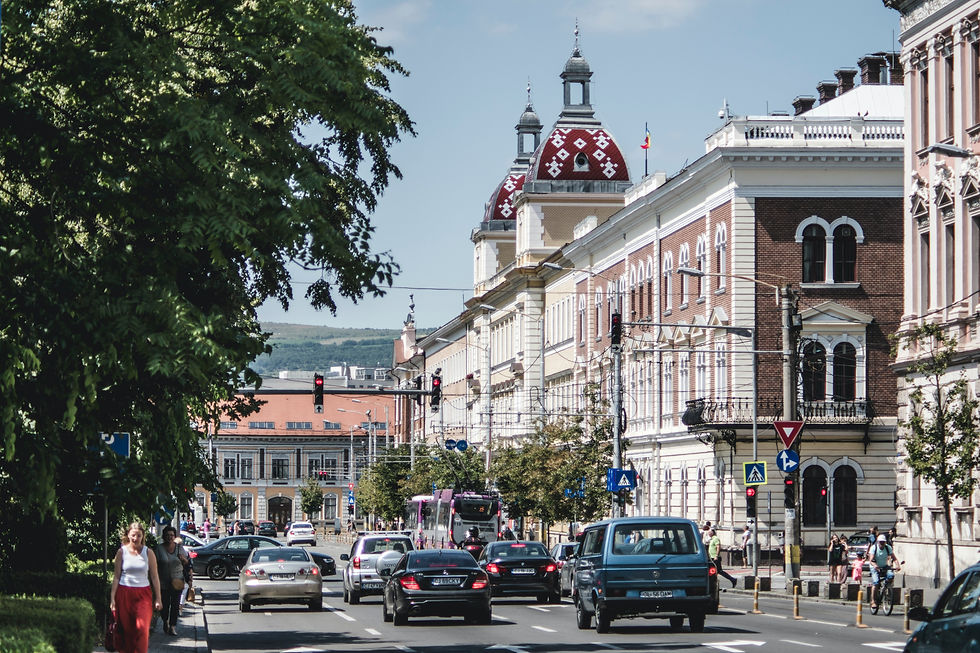
Time passed, the Romans withdrew, but Napoca remained. By the Middle Ages, the medieval fortress began to take shape, becoming one of Transylvania's strongholds. Under the protection of King Matthias Corvinus, born in Cluj, the city began to flourish again, and monuments like St. Michael's Church and the Tailors' Tower became essential landmarks of the city.
The Treasure City: More Than Just Beautiful Buildings
Cluj has been called the "treasure city" since the Middle Ages. But what makes this city a treasure? It’s not just the impressive Gothic architecture or its rich history.
Over time, the people of Cluj developed a civic spirit and an art of living together in a multicultural environment that is hard to find elsewhere. Each ethnicity and confession had its place here, Romanians, Hungarians, Germans, Jews, Saxons, and this created a true cultural mosaic.
The privileges granted to the city by Charles Robert of Anjou and later by Sigismund of Luxembourg consolidated its status as a "royal city," bringing freedoms such as the right to conduct trade, have its own administration, and, more importantly, build fortifications. This is how Cluj’s bastions and towers were born, mentioned in medieval chronicles as symbols of the city's prosperity.
Between Invasions and Revolutions: Cluj’s Complicated History
Over the centuries, Cluj was a stage for invasions, wars, and revolutions. The Vienna Dictate of 1940 brought Cluj back under Hungarian rule, but only for a short period, until Romanian and Soviet troops recaptured the city in 1944. Cluj’s residents witnessed dramatic political changes but managed to maintain a cultural and economic continuity that made Cluj an important center in Transylvania.
Today, Cluj-Napoca is more than just a city with an impressive history. It is a place where the past intertwines harmoniously with the present. Cetățuia, the fortress built by the Austrians, not only offers a spectacular view over the city but also serves as a reminder of Cluj's resilience and adaptability in the face of challenges.
Cluj Today: The IT and Education Capital
Nowadays, Cluj is not only a historic center but also one of the most dynamic and innovative cities in Romania. It hosts one of the largest IT communities in the country, and the start-ups that are born here have begun to have a global impact. Additionally, renowned universities attract tens of thousands of students annually, making Cluj a true city of youth, innovation, and cultural diversity.
Cluj-Napoca has managed to perfectly combine its long history with modern urban and economic development. It’s a place where you can walk down medieval streets and, just a few steps away, have a coffee in a state-of-the-art IT hub. A city that has seen it all, from Roman Napoca to Romania’s Silicon Valley, and continues to shine, adapting to each era without losing its essence.
8. Tourism: Cluj-Napoca, the City of Festivals and Urban Vibe
When it comes to tourism, Cluj-Napoca never disappoints.
The city lures you with a unique combination of nature, history, culture, and, of course, relaxation. Whether you’re a lover of outdoor walks, a fan of Gothic architecture, or just someone who wants to spend a quiet day, Cluj has it all. Let’s see what we can discover here!

The Hungarian Theatre of Cluj, or Teatrul Maghiar de Stat Cluj
Is a cultural gem nestled in the heart of Cluj-Napoca, serving as one of the oldest and most prestigious theaters in Romania. Established in 1792, the theater has a rich history, acting as a cultural bridge between the Hungarian community and the wider Transylvanian region.
For over two centuries, it has been a hub for artistic expression, offering a diverse range of plays, from classical Hungarian and international works to contemporary experimental performances.
“Alexandru Borza” Botanical Garden
Let’s start with a place where you can take your dose of nature and peace: the “Alexandru Borza” botanical museum. Spanning 14 hectares, this green paradise hosts over 10,000 species of plants.
If you’re the type who believes a stroll in the home garden isn’t enough, here you have an entire plant world at your disposal. Fancy a getaway to Japan? Perfect, visit the Japanese Garden! Want to feel like you're on the Mediterranean coast? The Rose Garden awaits you with the delicate scent of roses.
And if you want to feel like you’re in a tropical adventure movie, don’t miss the greenhouses with exotic plants, palms, orchids, cacti. Bonus: walking through the greenhouses gives you a tropical microclimate even on chilly autumn days!
Historic Centre: Old Town
Located in the historic center, is a charming blend of medieval architecture and modern life. It’s a lively area where you can stroll down narrow cobblestone streets and admire well-preserved landmarks like St. Michael’s Church and the Tailors' Bastion, while also enjoying trendy cafes and shops.
Interestingly, the Old Town is also known for its second-hand clothing stores, offering a mix of affordable used clothes choices. Despite its bustling city life, Cluj boasts some of the best air quality in Romania, making it a refreshing place to explore on foot.
Chios Lake: Oases of Relaxation in the Heart of the City
For a moment of urban calm, nothing beats a walk around Chios Lake, located in Central Park “Simion Bărnuțiu.” With over 185 years of history, the park is Cluj residents' favorite spot for relaxation.
The lake, created in 1865, offers the possibility of romantic boat rides. You can relax on the water and imagine you’re on a Venetian escape, only you're in Cluj – no gondoliers, but plenty of peace.
Turda Salt Mine: Adventure 120 Meters Underground
After you’ve relaxed enough on the surface, it’s time to go down a bit, about 120 meters underground, to the famous Turda Salt Mine. Just 31 km from Cluj, the Salt Mine is the place where you can see the history of salt mining in a spectacular way. Honestly, it’s not just a mining museum – it’s like an underground amusement park.
There’s a subterranean lake where you can take boat rides (yes, underground!), a futuristic carousel, and even an amphitheater where you can attend concerts with perfect acoustics. Plus, the air here is so clean that a walk through the salt mine can almost be considered a wellness session!
St. Michael’s Church: A Gothic Landmark in Unirii Square
When you reach Unirii Square, the historic city centre of Cluj, you’ll be greeted by one of the most impressive Gothic buildings in Romania: St. Michael’s Church.
Built between the 14th and 15th centuries, this architectural gem is like a portal through time, with stunning stained glass and an atmosphere that gives you chills, in the best way. And since we’re in Cluj, let’s not forget that the church tower is the tallest in Romania, so you have a perfect opportunity to feel “on top of the world” (literally).
Museum Square: Where Present and Medieval Meet Over Coffee
Museum Square is the ideal place for a well-deserved break. Here, in the city’s oldest square, you’ll find a mix of medieval atmosphere and modern cafes.
Whether you enjoy sipping a cappuccino at a terrace or just walking along the cobblestone streets, this square is a must-see. And for those passionate about history, the National History Museum of Transylvania and the Franciscan Church are two spots that will make you travel back in time.
Tailors’ Bastion: The Medieval Defense of the City
For a dose of history and fortifications, you can’t miss the Tailors’ Bastion.
It’s one of the few gates of the old medieval fortress that has remained intact.
Built by the Tailors' Guild (obviously), this massive bastion still bears traces of the city's old defensive system. Nowadays, the bastion has been transformed into an urban culture center, where you can attend exhibitions and events.
In conclusion, Cluj-Napoca has it all: from impressive natural landscapes in the Botanical Garden, to a boat ride on Chios Lake, to underground adventures at the Turda Salt Mine, and architectural treasures in Unirii Square. Whether you’re seeking relaxation, culture, or a little depth-defying adrenaline, Cluj awaits you with open arms – and maybe even a little boat at Chios.
9. Education and Innovation: The Youth and Cluj, The Perfect Pair
Cluj-Napoca is the place where education comes to life, and students become a true driving force of the city. With top universities, diverse programs, and a multicultural atmosphere that makes you feel at the heart of Europe, it's no wonder the city is called the "education capital of Transylvania." Let’s see what Cluj has to offer for those who want to learn, grow, and, why not, have fun!

Babeș-Bolyai University
When we talk about education in Cluj, the first name that comes to mind is Babeș-Bolyai University (UBB). Founded in 1581, UBB is like a "veteran" of education in Romania, but one that knows how to stay cool and relevant. With a diverse educational offering, UBB provides courses in no less than 6 languages, including Romanian, Hungarian, German, and even Italian, so, if you're a polyglot, this is the place for you.
UBB has 22 faculties, so whether you want to become a mathematician, actor, or expert in political science, you have plenty of options. And if you’re still wondering why to study here, you should know that it’s one of the highest-ranked universities in Romania in global rankings. In short, if you’ve graduated from UBB, you can be proud, and, who knows, maybe one day you’ll see your name in a list of global innovators!
“Iuliu Hațieganu” University of Medicine and Pharmacy
If you dream of becoming a doctor, Cluj offers one of the best places to turn your dream into reality: “Iuliu Hațieganu” University of Medicine and Pharmacy.
It’s famous not only because it’s the highest-ranked medical university in Romania, but also because it attracts thousands of international students annually. Yes, you heard that right! Over 2,500 international students study here, so if you feel a bit uncertain at first, you can be sure you won’t be the only one speaking English, French, or any other language.
With faculties covering all medical fields, from general medicine to pharmacy and nutrition, UMF is the place where students in white coats become everyday heroes. And if you like having the words "licensed doctor from Cluj" on your CV, this will open many doors worldwide.
Technical University of Cluj-Napoca
For those with technical minds and a passion for technology, the Technical University of Cluj-Napoca (UTCN) is the ideal destination. With a rich tradition and over 22,000 students, UTCN is a true hub of innovation. Here, future engineers, architects, and IT experts who will change the world are being developed, and Cluj is already famous for its vibrant IT community.
What’s great about UTCN? Well, besides the fact that you can study in international languages, the university offers access to cutting-edge bachelor's and master's programs in fields such as robotics, mechatronics, automotive engineering, and many more. So, if your dream is to create self-driving cars or friendly robots, UTCN is the perfect place for you.
University of Agricultural Sciences and Veterinary Medicine
If animals, agriculture, and everything nature-related fascinate you, then you must consider the University of Agricultural Sciences and Veterinary Medicine (USAMV).
With a history dating back to 1869, USAMV is the place where future veterinarians, agronomists, and food science specialists are trained. Its faculties cover everything from agriculture and horticulture to veterinary medicine and biotechnology.
So, if you dream of working on a smart farm or caring for animals in an ultra-modern veterinary hospital, USAMV offers you all the necessary resources. And, besides, you’ll study in a lively city, where after a day of classes you can relax in a botanical garden or take a walk in Central Park.
University of Art and Design
For those who feel they can change the world with a brush or a camera, the University of Art and Design in Cluj-Napoca (UAD) is the perfect place to nurture your talent. As one of the most important higher education institutions in the visual arts in Southeast Europe, UAD offers you the chance to study visual arts, design, or even develop your creative skills at the master’s and doctoral levels.
What’s even cooler? Cluj is already recognized for its contemporary art scene, so you’ll be surrounded by a vibrant community of artists. Who knows, maybe the next major art exhibition in Europe will feature your name!
“Gheorghe Dima” Music Academy
If you’ve dreamed of becoming a virtuoso on an instrument or being part of an international orchestra, the “Gheorghe Dima” Music Academy is the place where you can fulfill your musical dreams. With bachelor's, master's, and doctoral programs in various musical fields, the academy offers everything you need to perfect your talent.
The courses range from musical performance to composition and even musicology. So, if you love playing the violin, piano, or conducting an orchestra, Cluj offers the perfect environment for you to grow.
Cluj is, without a doubt, a city of education, whether we’re talking about technology, medicine, art, or agriculture, here you’ll find everything you need to develop your career. With top universities, renowned professors, and a vibrant city that never sleeps, Cluj-Napoca is the perfect destination for any student eager to learn and have adventures.
10. Real Estate Investments: Why You Should Buy Property in Cluj-Napoca?
If you’ve come to think of Cluj-Napoca as your next destination for real estate investments, congratulations! You’re about to venture into one of the most dynamic markets in Romania. But before you dive headfirst into a purchase, let’s review some factors that make Cluj a real goldmine (or, at current prices, a diamond mine).

Romanians and Loans: More Cautious Than You’d Think
Let’s start with an essential aspect: Romanians haven’t taken out many loans, at least compared to other countries in Europe. What does this mean for you, the smart investor?
Well, the demand for housing is high, and people want to buy, but they haven’t been as buried in debt as their Western neighbors. So, you have a market with room for growth in mortgage demand and, implicitly, in real estate investments.
In short, Romanians still prefer to get their hands on the money before diving into loans, which means you have the chance to get ahead of the curve. With credit interest rates still relatively accessible, there’s room for healthy growth in Cluj’s real estate market.
Purchasing Power: Cluj, Romania’s Silicon Valley?
Let’s talk about purchasing power.
Cluj is known for its dynamic community of IT specialists, and this has a direct impact on salaries and, implicitly, on housing prices. Salaries in the IT sector are among the highest in the country, so if you’re looking to invest in an apartment or a new house, you need to consider that many of your potential tenants or buyers will have pretty good incomes.

A smart investor knows that when you have a market made up of young professionals with solid incomes, housing prices rise, and demand remains steady. Moreover, these IT professionals love modern, energy-efficient apartments with an A energy class (let’s not forget that many of them are also budding environmentalists).
Growth Potential: Cluj, in Continuous Expansion
If you’re looking for a market with growth potential or a new address, Cluj is an excellent choice. The city is constantly expanding, with new residential neighborhoods springing up on the outskirts, like Bună Ziua, Borhanci, or Florești (yes, Florești is like the younger sibling that grew up too fast and now everyone notices it).
New constructions are in high demand, and developers are racing to offer modern, energy-efficient homes equipped with all the amenities you could need. If you want to invest in new builds, these are often good long-term solutions because they are easier to rent or sell.
Energy and Energy Class: Green is the New Trend
Speaking of energy efficiency in 2024 or 2025, Cluj’s real estate market is increasingly focused on the energy class of homes. With more and more Cluj residents concerned about environmental protection and rising energy costs, an A energy class home will be a smart investment. People are looking for apartments that allow them low bills and a reduced environmental impact.
So, if you want to optimize your investment, choose energy-efficient homes with solar panels, high-performance insulation systems, and other modern solutions. Not only will you attract tenants more easily, but you’ll also have a competitive advantage in the long term.
New Constructions vs. Old Homes: What to Choose?
The old investor’s dilemma: should you choose a new construction or an old home with renovation potential? In Cluj, both options can be attractive. New constructions come with all the modern advantages, energy efficiency, contemporary design, and fewer headaches with repairs.
On the other hand, old homes, especially in the historic center, can be gold for those willing to invest in renovations and turn them into architectural gems. Plus, let’s not forget that everyone dreams of living in a building with history!
Prices: A Story on the Rise
We know that real estate prices in Cluj are among the highest in the country, but that shouldn’t discourage you. Although you might have to dig a little deeper into your pocket for a property, keep in mind that the value of homes is constantly increasing. If you invest now, chances are high that in a few years, you’ll see a significant appreciation in the value of your property.
Even if the price per square meter makes you check your bank account again, remember that demand remains high, and Cluj continues to be a magnet for young professionals and expats.
Rents: A Pleasant Surprise for Investors
Another interesting aspect for investors is the rental market in Cluj. In a city with a large student population and a growing international community, rents are constantly rising. Even if the initial investment may be high, steady rental income can quickly turn your purchase into a profitable business.
Cluj is full of young people who prefer to rent a modern apartment with quick access to the center rather than buy their own home, so if you want to enter the rental market, you’ll find stable demand.
Real estate investments in Cluj-Napoca can be a real goldmine if you know where and how to get involved. From new, modern buildings to old homes with renovation potential, Cluj offers a wide range of opportunities. With steady demand, a growing market, and a population with increasing purchasing power, you can’t go too wrong if you choose to invest here.
11. Conclusion: Cluj-Napoca, The City of Opportunities
Cluj-Napoca is widely regarded as the unofficial capital of Transylvania and represents far more than a university center or a technology hub. It is a dynamic, fast-growing city where economic opportunity, cultural life, and long-term potential intersect.
With over 10 years of experience in real estate investments, including active involvement in the Cluj-Napoca market, we understand in depth what it means to identify a truly profitable property in today’s context. Beyond investment expertise, we also provide personalized 1:1 mentoring, offering clear guidance and practical insight to help you make informed and strategic real estate decisions.
Whether your interest lies in culture, investment opportunities, or living in a city with a strong growth trajectory and internationally recognized festivals, Cluj-Napoca continues to attract and inspire, offering both stability and possibility.
We wish you a wonderful journey ahead and continued success in building smart, sustainable investments that deliver value both now and in the years to come.


Comments